Silk Rug Cleaning and Repair
California Rug Cleaning provides specialized silk rug cleaning and repair at our Canoga Park facility. We care for genuine silk, silk blends, and bamboo silk rugs, with close attention to delicate dyes, fine fibers, pile direction, and sheen. Silk rug cleaning starts at $5 per square foot, with free pickup and delivery within 20 miles.
What We Consider Before Silk Rug Cleaning
A silk rug is the most detailed and luminous rug made by hand, and the least forgiving. Silk is weaker than wool underfoot, it degrades in sunlight faster than other natural fibers, and water, heat and alkalinity can change its dyes and texture in minutes. A method that’s routine for a wool rug can ruin a silk one in a single session.
Water Marks on Silk
Silk absorbs water quickly and unevenly. As a wet area dries, moisture carries soil, dye, and cleaning residue toward the edge, where it can settle into a visible ring. Silk’s smooth, reflective surface makes even a faint mark easy to see.
The risk
visible ring even when no residue remains. On rugs with cotton foundations, trapped moisture can also carry brown discoloration into pale areas. Rinsing one spot may spread the problem and create a larger water mark.
How we handle it
We use as little moisture as possible and treat the affected area evenly so a hard wet-to-dry edge does not form. Silk is carefully blotted instead of heavily rinsed, then dried quickly and uniformly to reduce rings, browning, and changes in texture or sheen.
Silk’s Sheen Is Easy to Disturb
Silk gets its sheen from smooth filaments that reflect light in the same direction. Because silk rugs are finely knotted and have less spring than wool, even small changes in the pile can be easy to see.
The risk
Silk weakens when wet, and its filaments can shift or fray under pressure. Rubbing a damp spot or using a rotary brush can permanently roughen the surface, leaving a fuzzy or dull patch. Fine grit trapped in the dense pile also wears against the fibers and gradually reduces their sheen.
How we handle it
We remove dry soil before introducing moisture, then clean the rug by hand in the direction of the pile. Machine brushes are never used. Moisture is removed quickly, and the rug is dried evenly with the pile groomed in one direction to preserve its smooth texture and consistent sheen.
Not Every “Silk” Rug Is Silk
Rugs sold as silk may actually be made from viscose, rayon, bamboo silk, mercerized cotton, or a blend of fibers. These materials can look similar, but they respond very differently to moisture and cleaning.
The risk
Viscose becomes much weaker when wet. It can brown, shed, flatten, or develop permanent water marks if moisture is applied unevenly or removed too slowly. Even a small attempt at spot cleaning can leave a visible ring. Treating one fiber like another can permanently change the rug’s color, texture, and appearance.
How we handle it
We identify the fiber before quoting or cleaning the rug. If it contains viscose or another silk-like material, we explain the limitations and likely results before work begins.
Our Silk Rug Cleaning Process
Area rugs need more than a quick pass with a carpet-cleaning wand. Surface cleaning may improve their appearance, but it can leave grit deep in the foundation . At our facility, we take your rug through a complete cleaning process that goes beyond the surface, removing hidden buildup and bringing out its natural beauty.
We confirm whether the rug is silk, viscose or a blend, because it changes the whole method.
Every color is tested, including silk highlights in wool rugs.
Grit is removed gently before any moisture, so it doesn’t turn to mud in the fine pile.
Cool water, a gentle pH-neutral solution and as little water as the rug needs. Silk is cleaned by hand only, with no rotary brush.
Silk fringe is fine and breaks easily, so it’s cleaned separately by hand.
The rug is flushed and squeegeed again and again until the water running off it is clear, not just until the rug looks clean, because detergent left behind attracts soil. The last of the surface water is squeegeed out before the rug goes to dry.
Fast, flat and even, out of direct sun, to prevent browning, water marks, dye movement and shrinkage.
The pile is groomed in one direction so the sheen is even when the rug comes home.

Is it time for your silk rug cleaning?
A silk rug in light use should be assessed and cleaned by a specialist every 12 to 24 months. Any serious spill, pet accident or water damage needs attention right away, because the longer it sits, the more likely it is to set.
Signs yours is due
·
The sheen looks dull or grayish
·
Grit you can feel at the base of the pile
·
A spill, pet accident or water mark, even a small one
·
Any odor
Silk rug repair
Silk Rug Repair, Matched Knot by Knot
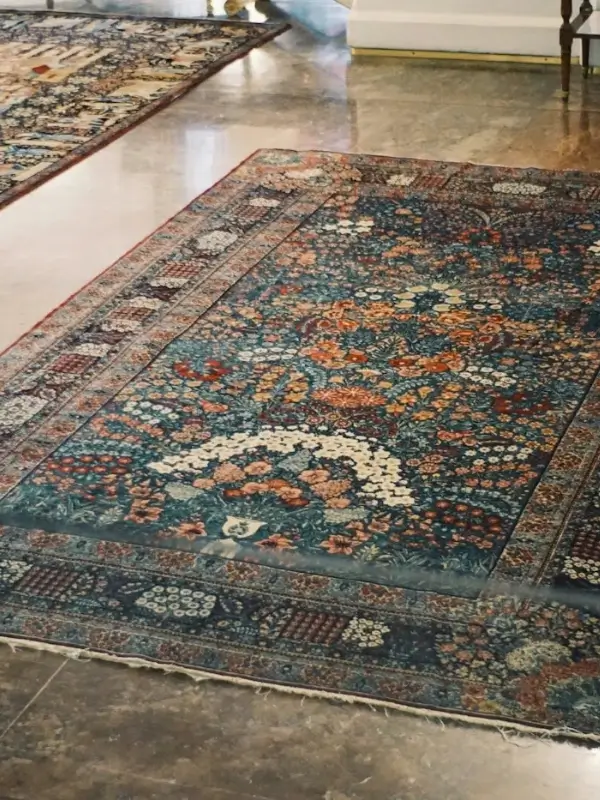
Silk rugs can be repaired, but they are the hardest rugs to repair invisibly. Three things drive that: extreme knot density, with hundreds of knots in every square inch; sheen and pile direction, since a repair that reflects light differently shows instantly; and silk foundations, which have to be rebuilt in silk. We repair silk rugs by hand at our Canoga Park facility, and these are the repairs we see most.
Side edges
The edges on fine silk rugs are very thin. Once the wrapping wears, they roll and wear faster, and a curling edge keeps wearing along the fold.
Fringe
Silk fringe is fine and breaks easily, especially when it’s caught in a vacuum. Because the fringe is the rug’s foundation, every broken strand weakens the end.
Holes, tears and moth damage
Silk is a protein fiber, so moth and carpet beetle larvae eat it just as they eat wool. A fine silk rug holds hundreds of knots in every square inch, so even a small hole means rebuilding a great many knots.
Splits along fold lines
Silk foundations crack where a rug has been folded for storage or shipping, and those cracks open into splits across the rug.
Every repair is quoted individually, and the estimate is free.
Free pickup on repairs applies to jobs of $100 or more within 20 miles.
Other Rugs We Service
In addition to silk rug cleaning, California Rug Cleaning handles every type of area rug, including machine-made, flatweave, shag, hide and runners. The four below are the ones that need a specialist’s judgment rather than a standard wash.

Oriental
Turkish, Chinese, Indian, Caucasian: construction and dye chemistry vary enormously, and so does what a rug can safely take.

Wool
Where most rug damage actually happens. Hot water and harsh detergent strip the lanolin and shrink the foundation.

Persian
Hand-knotted, with fringe that’s structural rather than decorative, and dyes tested before any water touches them.

Antique
An antique rug’s condition guides every decision. We identify dry rot, weakened areas, and old repairs before selecting a cleaning method.