Oriental Rug Cleaning and Repair
California Rug Cleaning provides Oriental rug cleaning and repair tailored to the construction, fibers, and dyes associated with each rug’s region of origin, including Turkish, Chinese, Indian, and Caucasian rugs. Cleaning starts at $3 per square foot, with free pickup and delivery within 20 miles or our Canoga Park Facility.
What We Consider Before Oriental Rug Cleaning
“Oriental” refers to a broad category of handmade rugs produced across many regions from Turkey and the Caucasus through Iran, Afghanistan, Pakistan and India to Nepal, Tibet and China. The construction, fibers and dyes change from one region to the next far more than most people expect. There is no single safe recipe for the whole family, which is why every Oriental rug is thorough assessed before any work is done.
Oriental rugs vary by region
Oriental rugs can look similar while being built very differently. Wool grade, spinning, dye recipe and foundation vary by village and weaver. Turkish, Caucasian, and Afghan rugs often have wool foundations, while many Indian, Pakistani, and Chinese rugs use cotton.
The risk
Without identifying the differences between the rugs , cleaning can cause permanent shrinkage, rippling, browning, dye movement, or or leave the rug crooked and misshapen.
How we handle it
We identify the rug’s materials, construction, and regional origin before cleaning. The colors are tested for stability, and the wash and drying process adjusted to the rug .
Dyes That Need Special Care
Oriental rugs may contain natural dyes such as madder and indigo, early synthetic dyes, or newer chrome dyes. Their colors may also have been altered after weaving through chemical washing, tea washing, or painted touch-ups. These differences can affect how the colors respond during cleaning.
The risk
Cleaning a rug without identifying its dyes can turn one unstable color into widespread, permanent damage. Heat, steam, or the wrong cleaner may cause colors to bleed across the design, make decorative washes appear blotchy, and spread painted repairs into nearby fibers.
How we handle it
Before washing, the rug’s dyes are tested for stability to identify colors that may bleed, fade, or transfer. We also look for previous dye treatments and painted touch-ups that could react during cleaning.
The fringe is the foundation
On a genuine Oriental rug, the fringe is not an added decoration. It is formed by the exposed ends of the warp threads that run through the rug, while the pattern is built knot by knot around the warp and weft.
The risk
Scrubbing, bleaching or catching the fringe in a machine weakens the warps that hold the ends together. Bleach weakens cotton fringe and can yellow it, and once the fringe breaks down the knots start falling out of the ends.
How we handle it
The fringe is cleaned separately by hand and combed out. It is never bleached white, and we never trim it to tidy it up.
Our Oriental Rug Cleaning Process
Area rugs need more than a quick pass with a carpet-cleaning wand. Surface cleaning may improve their appearance, but it can leave grit deep in the foundation . At our facility, we take your rug through a complete cleaning process that goes beyond the surface, removing hidden buildup and bringing out its natural beauty.
We record the fiber, foundation, origin, previous repairs, weak spots and any moth damage, along with signs of tea washing or painted touch-ups.
Every color field is tested, especially reds, dark blues and colors next to ivory.
The rug is beat and vacuumed from the back to release dry grit sitting at the base that water would otherwise turn to mud.
Cool water and a pH-neutral, wool-safe solution. Sturdy wool pile is brushed, and carved, chemically washed or delicate pile is cleaned by hand.
The fringe is cleaned separately by hand.
The rug is flushed and squeegeed again and again until the water running off it is clear, not just until the rug looks clean, because detergent left behind attracts soil. The last of the surface water is squeegeed out before the rug goes to dry.
Fast and controlled, with air moving over both faces until the foundation, not just the pile, is dry.
The pile is groomed back to its natural direction and the rug is blocked so it lies square.

Is Your Oriental Rug Due for Cleaning?
Most Oriental rugs in normal household use need a professional wash every 12 to 24 months. Rugs in a home with pets or children, or in a hallway or dining room, need it sooner.
Signs yours is due
·
The colors look dull or flat
·
Grit you can feel at the base of the pile
·
Fringe that has turned gray or brown
·
Any odor
Oriental rug repair
Oriental Rug Repair Matched to the Rug’s Origin
The Oriental family spans a dozen weaving traditions, and a good repair speaks the rug’s own dialect: the right knot, the right foundation fiber, the right side and end finish, and wool that ages the way the original does. A repair that ignores the region, like a Persian knot in a Caucasian rug or cotton warps in a wool-on-wool tribal piece, is weaker and easy to spot. We repair Oriental rugs by hand at our Canoga Park facility, and these are the repairs we see most.
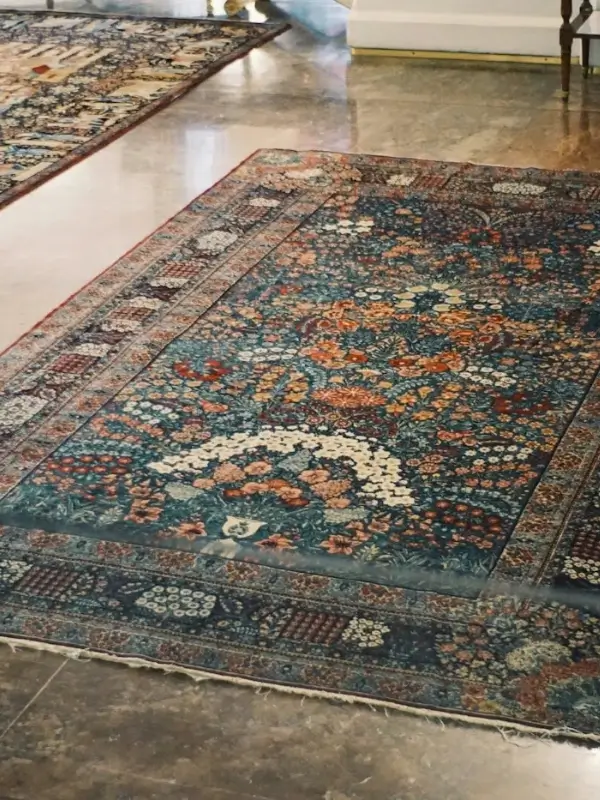
Side edges
The side cords take the wear every time a rug is moved, vacuumed or walked across. Caucasian and tribal rugs often have thick, multi-cord wrapped sides, and when that wrapping wears through, the edge warps beneath it start to break.
Fringe and flat-woven ends
Many Turkish, Caucasian and Turkmen rugs finish in a flat-woven kilim band, sometimes a long decorative apron. When that band frays, the ends begin to unravel, and hand-knotted rugs unravel progressively, a row at a time.
Holes and moth damage
Most Oriental rugs are wool or silk, which moth and carpet beetle larvae feed on. The damage starts in dark, undisturbed places, under sofas, beds and heavy furniture, and often isn’t noticed until the pile has been grazed down to the foundation.
Worn areas and corroded browns
In many older Oriental rugs, the iron mordants used for dark brown and black dyes have slowly eaten the wool, leaving those motifs lower than the surrounding pile. It’s a normal sign of age, but where the wear reaches the foundation, the exposed area needs attention before it spreads.
Most Oriental rugs we see need a wash and a small repair, and doing both in one visit saves you a trip. Every repair is quoted individually, and the estimate is free.
Free pickup on repairs applies to jobs of $100 or more within 20 miles.
Other Rugs We Service
In addition to Oriental rug cleaning, California Rug Cleaning handles every type of area rug, including machine-made, flatweave, shag, hide and runners. The four below are the ones that need a specialist’s judgment rather than a standard wash.

Persian
Hand-knotted, with fringe that’s structural rather than decorative, and dyes tested before any water touches them.

Wool
Where most rug damage actually happens. Hot water and harsh detergent strip the lanolin and shrink the foundation.

Silk
The least forgiving fiber for a rug. These rugs are given the most gentle treatment, washed and finished entirely by hand.

Antique
An antique rug’s condition guides every decision. We identify dry rot, weakened areas, and old repairs before selecting a cleaning method.