Area Rug Stain Removal
California Rug Cleaning provides rug stain removal at our Canoga Park facility, with free pickup and delivery within 20 miles. We assess wine, coffee, vomit, ink and other household marks before choosing a treatment. Your rug’s fibers, dyes and any previous cleaning attempts help determine what can safely come out.
Rug Stain Removal Takes More Than Spot Cleaning
Rug stain removal depends on both the spill and the surface it reaches. Wine can add pigment, coffee leaves tannins, vomit combines several substances, and inks vary in formulation. Liquid can also reach the foundation, where residue may travel upward as the rug dries. A mark that looks similar on two rugs may need very different treatment, especially when the rug’s own dyes are sensitive.
Red Wine Stains on Rugs
Red wine brings together natural pigments and tannins. Its color can spread beyond the original splash as liquid moves through the pile, and older marks may darken toward brown as the tannins oxidize. Getting red wine out of a rug becomes harder when the spill has dried or earlier cleaning has affected the surrounding dyes.
How Do You Get Red Wine Out of a Rug?
Blot fresh wine with clean white towels. If the rug tolerates water, dab with a small amount of cool water and blot again, working inward from the edges. Avoid scrubbing, salt and heat. For silk, viscose, antiques or color transfer, stop and seek professional treatment.
Lift the affected area so air reaches both sides. A remaining mark needs assessment before adding stronger products.
Coffee Stains on Rugs
Coffee leaves tannins that can darken with age. A coffee stain on rug fibers may also develop a brown ring as moisture carries dissolved residue toward the edge or back to the surface. Milk or cream adds protein and fat, so treating the visible brown color may address only part of the spill.
How Do You Remove a Coffee Stain From Rug Fibers?
Blot immediately with a clean white towel. On a water-tolerant rug, apply a little cool water and blot repeatedly without saturating the backing. Avoid hot water, especially if the coffee contained milk. Stop if the rug’s color transfers, and ask a specialist about any remaining brown mark.
Removing a coffee stain from rug fibers may require tannin treatment. Repeated scrubbing can damage the pile without resolving the discoloration.
Cleaning Vomit From a Rug
Vomit can contain stomach acid, bile pigments, proteins and food coloring. These create different cleaning challenges within the same spot. Acid and bile can also change existing dyes, particularly on sensitive materials, so a pale or discolored patch may reflect damage rather than residue that stronger cleaning will remove.
How to Get Vomit Out of a Rug
Lift solids with a spoon, then blot moisture with white towels. If the material tolerates water, dab with cool water and blot again. Avoid rubbing, hot water and untested enzyme sprays. For silk, viscose, antiques or visible color changes, arrange specialist treatment promptly.
When cleaning vomit from rug fibers, check underneath as well. Material left in the backing can contribute to lingering odor even after the surface looks clean.
Rug Stain Removal for Ink
Ballpoint, gel and permanent-marker inks do not respond alike. Their dyes, pigments and carriers determine which treatment might work. A solvent that dissolves ink can also move the rug’s own colors or affect its backing, making an improvised treatment riskier than the original mark.
How Do You Get Ink Out of a Rug?
Blot wet ink gently with a clean white cloth, using a fresh section each time. Do not scrub or pour alcohol, solvent or nail-polish remover onto the spot. Tell a rug specialist which pen or marker caused it so treatment can be tested against the ink, fibers and dyes.
Keep the pen or photograph its label if possible. That information is more useful than trying several household products.
Specialized Rug Stain Removal
The right treatment needs to affect the spill without disturbing the rug. How to get vomit out of a rug differs from how to get red wine out of a rug, and the material matters just as much as the spill. We identify both the stain and the rug’s fibers, then match the treatment to both. These findings guide our rug stain removal service.
Every stain is identified before it’s treated: tannin, protein, dye, oil, rust or color loss. We also identify the fiber and how the rug was made. Together those decide what can be used safely and whether the stain is removable, improvable or permanent. You hear that before we start.
The rug’s dyes around the stain are tested, and so is the treatment itself, before anything goes on the stain. Anything strong enough to remove a stain can also move a rug’s color, especially on handmade rugs with natural dyes.
Each stain gets the treatment made for it: tannin removers for wine and coffee, protein treatments for vomit, solvents for ink and oil, and specialized treatments for rust and red dyes. Heat is used only when the treatment calls for it, never as a shortcut.
Treating only the surface leaves residue in the foundation, which can wick back up as the rug dries and cause stains to reappear days later. Thorough rug stain removal includes washing, rinsing and drying the whole rug after targeted treatment, followed by an inspection for any returning marks.

Need More than Just Rug Stain Removal?
Some damage can’t be washed out. Faded or bleached patches, weakened foundation, worn pile and frayed edges need repair rather than cleaning. We handle both in-house, so one pickup covers everything your rug needs.
Signs You Need Repair
·
Pale, bleached or orange spots
·
Faded or uneven color in one area
·
Brown rings or stiffness
·
Fuzzy or distorted pile
Why Materials Matter
The same spill can rinse out of one rug and permanently mark another. Removing a coffee stain from rug fibers, for example, requires knowing what those fibers can tolerate. Before any rug stain removal, we identify the fiber, the dyes and the stain itself, then test the colors so the treatment fits both the stain and the rug.
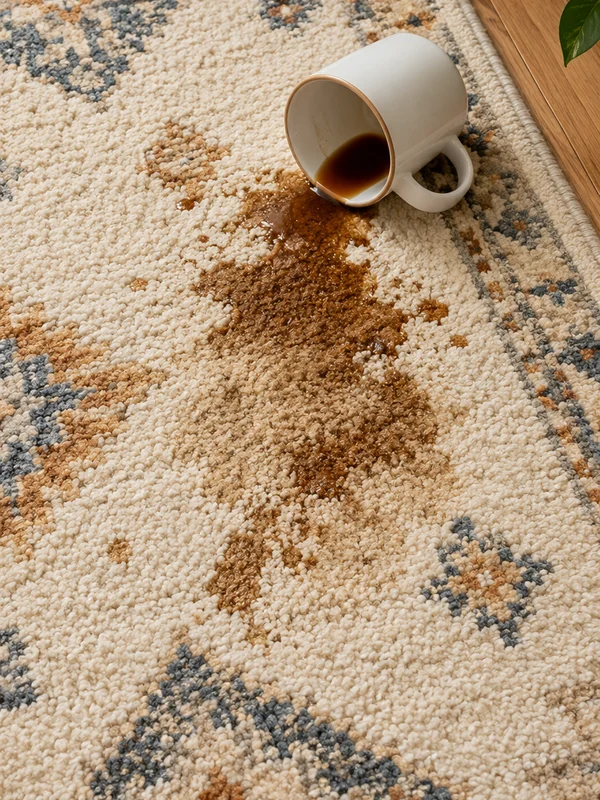
Wool
Wool’s natural lanolin resists a fresh spill for a short time, which gives you a window to blot. But wool is dyed with acid dyes, so red drinks and other dyed spills bond to it the same way the rug’s own color did. So, getting red wine out of a rug made of wool can be particularly difficult if its not handle immediately.
Silk & Viscose
Silk absorbs spills fast, shows every mark, and its dyes bleed easily. Viscose (art silk) weakens when wet and can brown or yellow as it dries, so even water can leave a mark.
Synthetics
Nylon, polypropylene and polyester resist most water-based stains, which makes them forgiving. The exceptions are red dye on nylon, which takes dye the same way wool does, and grease or oil on polypropylene and polyester, which those fibers attract and hold.
Cotton & Jute
Cotton flatweaves and foundations, and plant fibers like jute and sisal, absorb spills quickly and wick them back up as they dry. Jute and sisal can brown from water alone, so they’re cleaned with dry methods and minimal moisture.
Pickup & delivery
Get Rug Stain Removal Without the Extra Trips
We can collect your rug and return it when ready, or you can bring it to our Canoga Park facility. Whether you need help getting red wine out of a rug or treating another spill, tell us what happened and which products you have already tried. We’ll assess the affected area and discuss treatment before work begins.
Option one
Free pickup & delivery
Free within 20 miles of our location. Flat-fee for longer distances.
- Save the trips to our facility
- No lifting or loading a bulky rug yourself
- Schedule pickup and delivery to fit your plans
Option two
Drop-offs & walk-ins
Bring the rug in any day we are open. No appointment, and someone will look at it with you at the counter.
- 8559 Canoga Ave, Canoga Park, CA 91304
- Tuesday to Sunday, 10:00am to 5:30pm
- No Appointment Required
Other Rug Cleaning Services
Stains aren’t the only thing that can happen to a rug. Here’s what else we treat, with free pickup and delivery within 20 miles of Canoga Park.
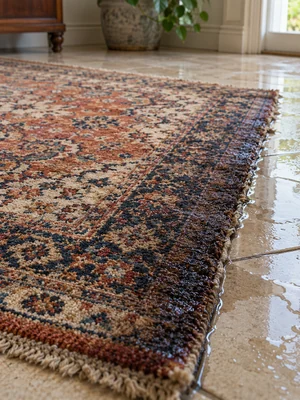
Mold & Mildew
Specialized rug cleaning process for moldy rugs, guided by the water source, rug type and materials and extent of damage.
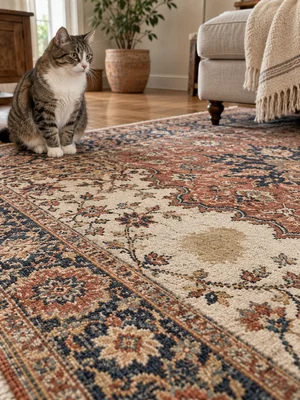
Pet Urine & Odor
Deep cleaning treatment for pet urine deposits and pet odor with attention to affected dyes and contamination in the rug.
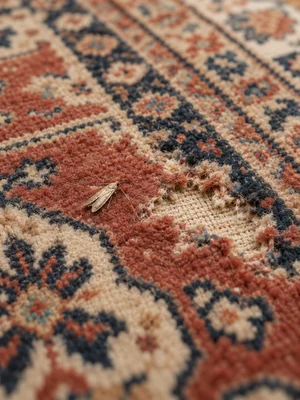
Moth Damage
Supplemental cleaning for moth-affected area rugs, removing larvae, eggs and debris from the pile and foundation.